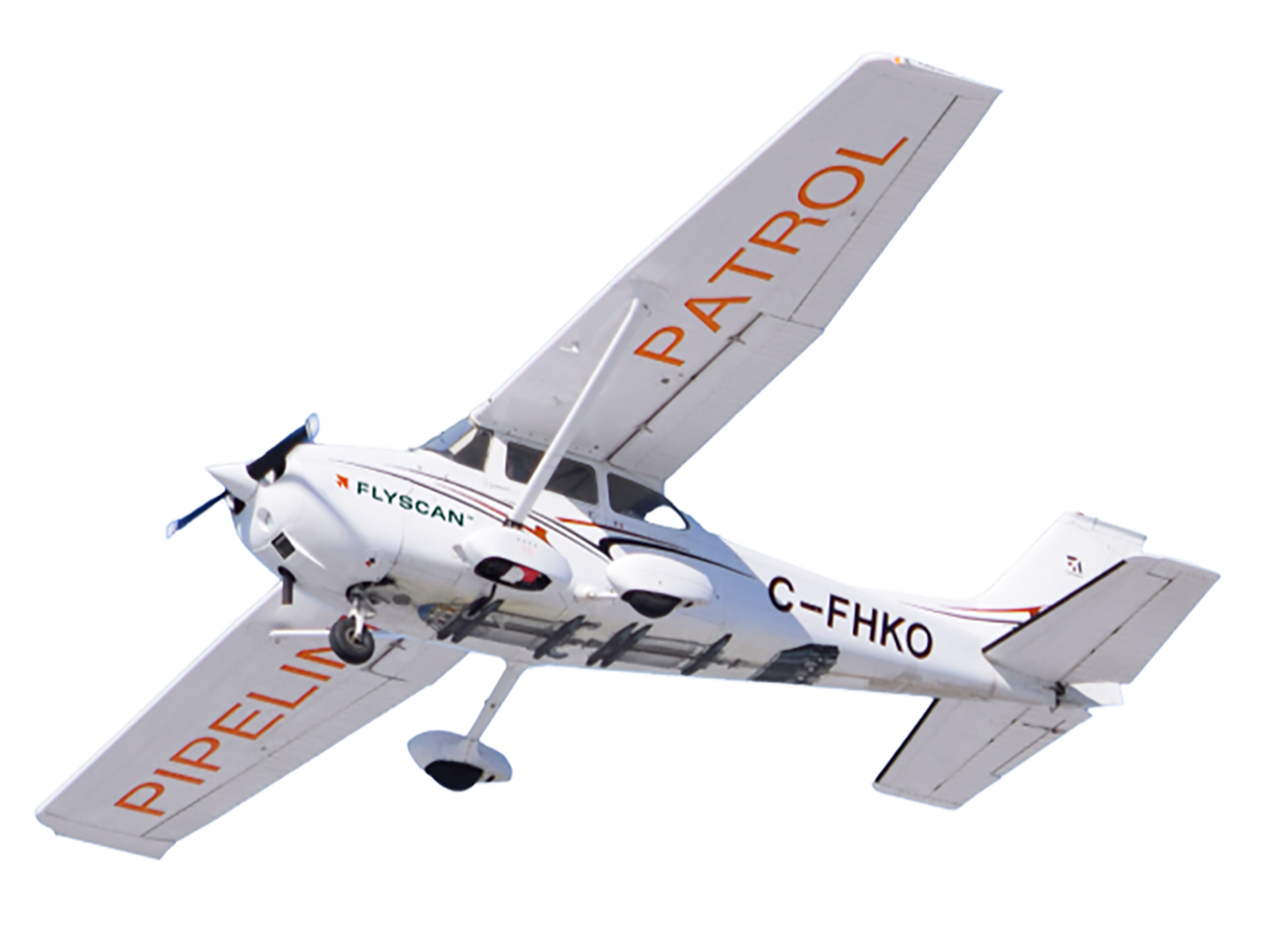
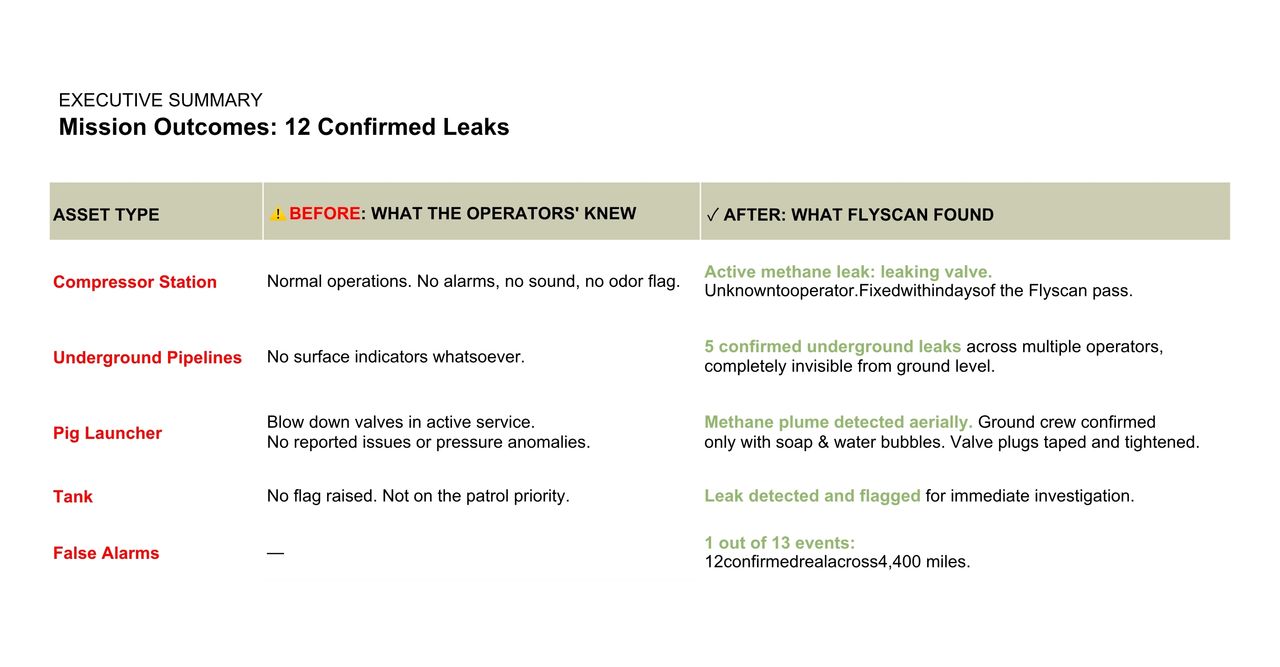
Flyscan hyperspectral methane detection capabilities flight: 12 leaks found and confirmed across 4,400 miles in a single pass, single solution.
The Problem with Current Methods
Most pipeline operators rely on third-party remote sensing, periodic walkovers, or ground inspections to find methane leaks. These methods share a critical flaw: they miss small, slow, or subsurface releases, especially in the case of underground pipeline leaks situated far from facilities. Leaks often go undetected until a regulatory audit or incident. Until now, no single solution combined methane detection, liquid leak detection, and right-of-way (ROW) threat detection, forcing operators to manage multiple vendors, added costs, and scheduling gaps.
What Flyscan Demonstrated
How It Works
Flyscan’s existing HySpex hyperspectral camera captures short-wave infrared spectrum imagery. New physics-based methane algorithms developed by Flyscan, combined with AI-accelerated post-flight processing, power the detection breakthrough. Critically, no hardware upgrade is required — existing pod customers can receive the methane capability through a software update. Full commercial launch is planned for Q4 2026.
One Pod.
Compatible, effective, low burden.
The same Flyscan pod that detects methane also delivers:
- Liquid hydrocarbon leak detection
- Real-time ROW threat detection notifications
- Exposed pipe and geohazard detection
- Automated post-weather inspections
- Vegetation management
- Depth of cover assessment
- Lidar-like terrain and geospatial models for surface and terrain
- High-resolution imagery every ~3 weeks, offsetting costs for third-party image acquisition
Why This Changes Pipeline Integrity
Operators managing both gas and liquid product lines can now achieve methane compliance, liquid leak detection, and threat monitoring in a single aerial pass. One vendor. One platform. No redundant contracts. For pipeline operators focused on ROW integrity, safety performance, and regulatory compliance, Flyscan’s methane capability represents a material shift in how leak detection gets done.
See the complete mission findings: asset by asset, event by event.